
Snoqualmie Falls
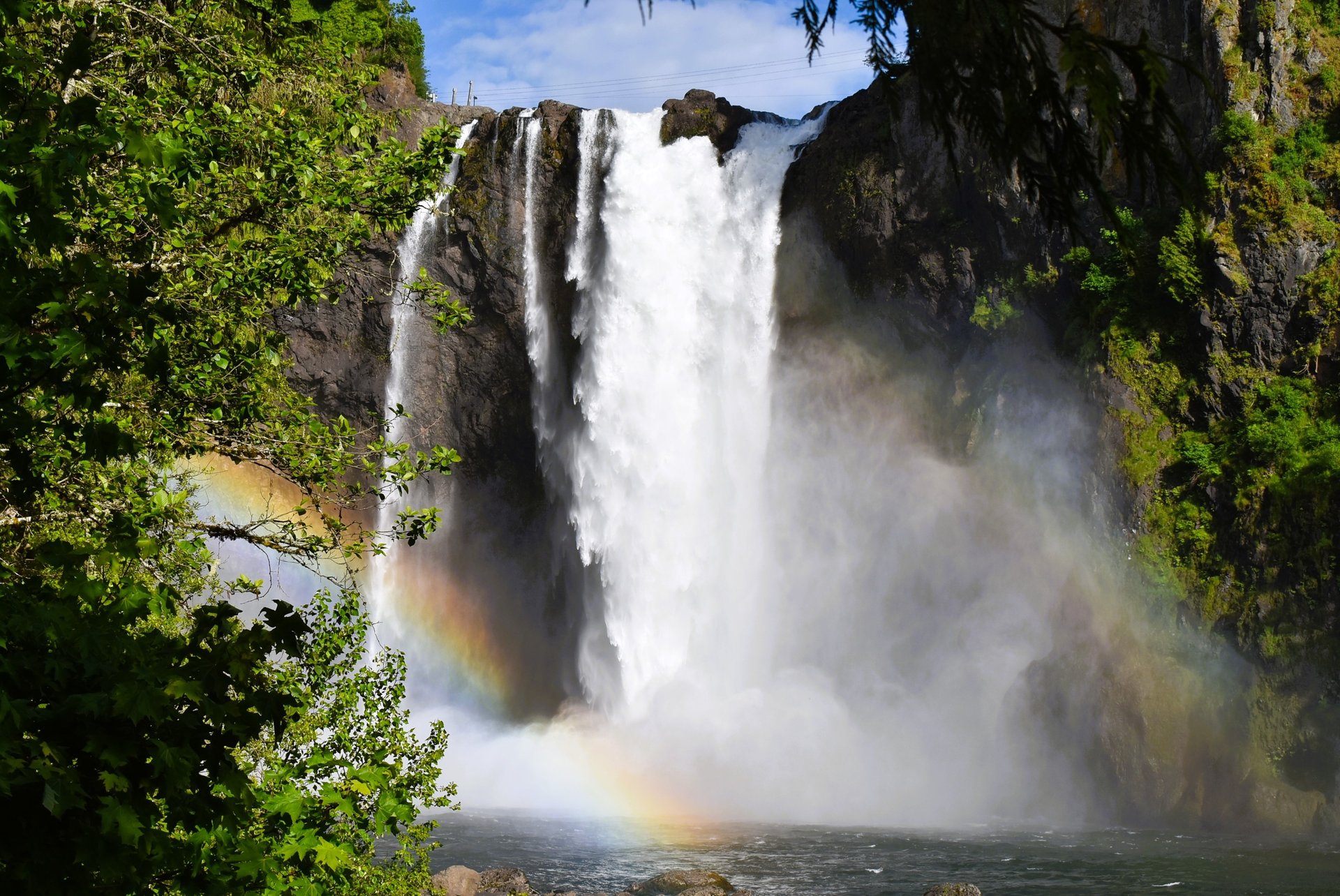
Washington's most iconic waterfall, plunging 268 feet into a narrow canyon just east of Seattle.
Field Note 002
Overview
Snoqualmie Falls is among the best-known natural landmarks in Washington. Millions of visitors stop by every year to watch the Snoqualmie River pour over a volcanic cliff before continuing west toward the Snohomish River and ultimately the Puget Sound.
Since salmon cannot pass the 268-foot drop, building a hydroelectric plant here had far less impact on migrating fish than it would have on most Northwest rivers. The unusual combination of abundant water and a natural fish barrier made Snoqualmie Falls one of the earliest and most practical sites for hydroelectric generation in Washington.
What There Is to See
The upper observation deck overlooking the waterfall.
The lower riverside viewpoint, reached by a short but steep trail.
Salish Lodge & Spa, perched beside the falls.
The Restaurant & Terrace Bar at Salish Lodge overlooking the falls.
The Snoqualmie River gorge below the falls.
Hydroelectric facilities have harnessed the river's power for more than a century.
What Surprised Us
Standing at the upper overlook, the falls are undeniably impressive, and you will be in the splash zone during high flow times. We love both the power and awe of flood-stage Snoqualmie Falls and the multi-cataract braid of lower flow times.
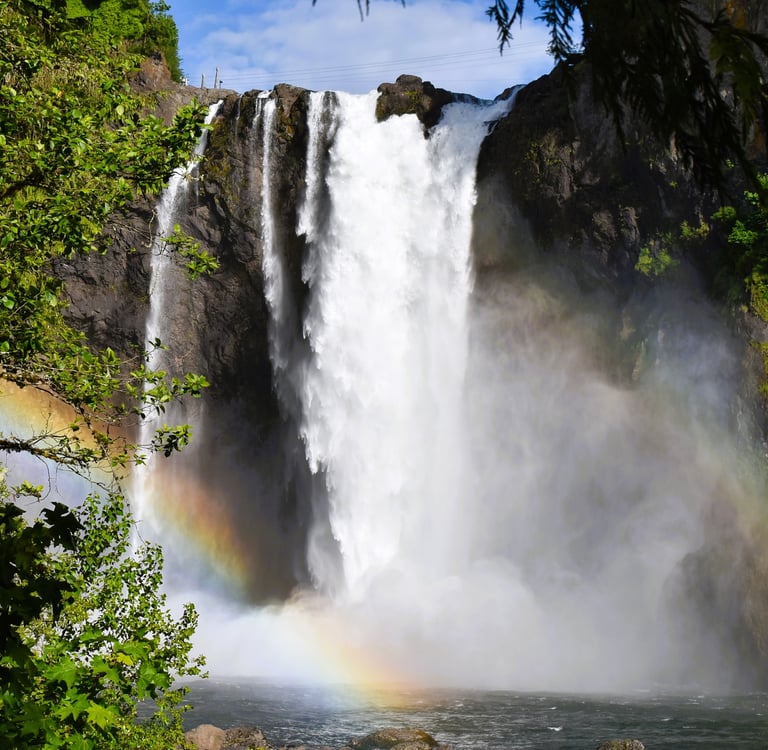
Visiting the bottom for the first time when we had seen the top several times amazed us. From below, the waterfall feels dramatically larger than it appears from above, and the sound of the water rumbling through the gorge gives a even greater sense of its power. The light is also better for catching rainbows.
Continue Exploring
Watch on YouTube
Read Deeper
Waterfall Lover’s Guide Pacific Northwest by Gregory A. Plumb
Roadside Geology of Washington by Marli B. Miller and Darrel S. Cowan
More Notes on Waterfalls
Plan Your Field Trip
About 30 miles (48 km) east of Seattle via I-90.
The upper viewpoint is only a short walk from the parking area.
The trail to the lower viewpoint descends roughly 300 feet and climbs back out.
Or you can drive to a lower viewpoint parking lot and do a much shorter hike for the lower view.
The falls are spectacular year-round, but spring snowmelt typically brings the highest flows.